
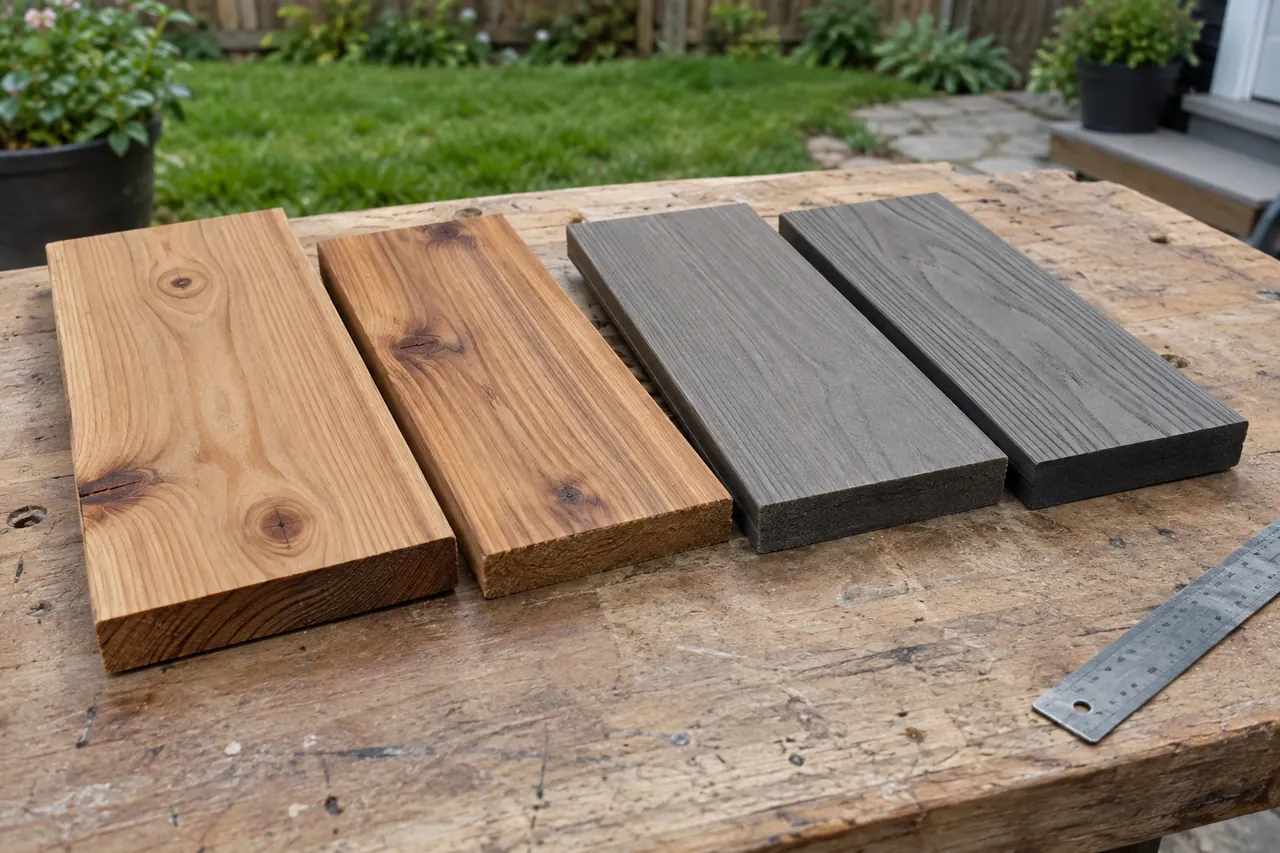
Cedar vs composite decking in Seattle is a choice between material character, initial price and future upkeep. Cedar offers natural grain and finish options; capped composite offers manufactured colors with a different cleaning routine. The right comparison includes the whole installed deck and the care you expect to arrange—not just the price of the boards.
Seattle rain, shade, leaves and slow-drying areas make drainage and maintenance relevant for either surface. A 300 sq ft deck in full sun can have different needs from the same size deck beneath trees. Use the comparison below, then ask us to price both options for the same deck.
Upfront Cost: Cedar Wins, Clearly
In the lower-upfront-cost scenario below, cedar starts below composite. That is a useful budget comparison, but not a promise that every cedar grade costs less than every composite collection. Premium cedar, complex fastening, elevation, rails and access can change the result.
| Comparison | Cedar | Composite |
|---|---|---|
| Installed cost per sq ft | $35–$60 | $45–$85 |
| Typical 300 sq ft project | $10,500–$18,000 | $13,500–$25,500 |
| Boards’ share of the cost | Depends on cedar grade and finish | Depends on brand, collection and supporting details |
The 300 sq ft totals are the per-square-foot assumptions multiplied by 300. Replace these assumptions with current, itemized bids before deciding.
Use the same footprint, stair arrangement, railing, demolition, disposal and permit scope for both options. Footings and framing may be similar, but they are not automatically identical: board support, spans, fastening and added loads must suit the selected system. Ask for material, labor, taxes, permit fees and exclusions separately. If the budget buys a larger cedar deck or a smaller composite deck, compare useful space alongside upkeep.
Maintenance: Where Seattle Changes Everything
Cedar care includes clearing debris, cleaning and maintaining the selected finish. The often-used two-to-three-year staining interval is a planning assumption, not a rule for every board, coating or exposure. WRCLA finishing choices describes differing finish choices; one cited finish has a two-to-four-year maintenance-coat interval. Inspect the coating and follow its label.
For a re-stain, account for cleaning, any required brightening, preparation, materials and drying time. A professional re-stain can run $700–$2,000 per cycle; ask us to price it for your deck. DIY work also requires labor, equipment and suitable weather. Time the work to the finish manufacturer’s temperature, moisture and curing instructions.
WRCLA maintenance guidance recommends annual cleaning, clear drainage and allowing damp areas to dry; it cautions against power washing cedar. Move planters and furniture periodically. Graying alone is not proof of structural decay, but soft board ends, persistent moisture or loose connections need investigation.
For high-performance Trex boards, Trex care and cleaning specifies warm soapy water and a soft-bristle brush for dirt and debris. Identify older products before cleaning: instructions and pressure-washing limitations differ. Remove leaves and spills, and check the frame, fasteners and rails. Composite is lower-maintenance in many comparisons, not maintenance-free.
| Year | Cedar | Composite |
|---|---|---|
| 0 | Initial construction: $10,500–$18,000 scenario | Initial construction: $13,500–$25,500 scenario |
| 2–3 | Potential first re-stain: $700–$2,000 scenario; follow actual finish condition | Clean using product-specific instructions; inspect connections |
| 5 | Check for the next finish cycle and damaged boards | Clean, inspect fasteners, surface and frame |
| 8 | Assess coating, board ends and any required repairs | Clean and inspect the whole deck, not only the surface |
| 12–15 | Repeat finish work as needed; inspect rails, stairs and framing | Maintain drainage, inspect structure and review warranty terms |
| 20–25 | Evaluate condition and repair versus replacement; age alone is not a diagnosis | Evaluate actual condition; warranty coverage depends on product and claim terms |
Eight to twelve finish cycles at $700–$2,000 each total $5,600–$24,000 before inflation, repairs or cleaning. Keep DIY materials and professional labor separate, and include cleaning costs for composite too.
A six-to-ten-year break-even point is possible under some assumptions, but it is not a Seattle guarantee. Divide the extra initial composite cost by a realistic annual maintenance-cost difference to estimate a simple crossover. Then consider irregular repair costs and how long you expect to keep the property. Request side-by-side estimates for the actual site.
What to Check at Year 10
A ten-year comparison should inspect condition, maintenance history and construction details. On cedar, check the finish, checking, splinters, softened ends, moss-prone shade lines and moisture around planters. A maintained wood deck can look very different from one with trapped water, but age or surface color alone does not tell you whether its frame is safe.
On composite, examine damaged boards, fastening, gaps, drainage and discoloration alongside the underlying structure. A newer-looking surface can conceal a deteriorated ledger, joist or post connection. For a Magnolia, Laurelhurst or other Seattle property, establish the actual exposure rather than attributing condition to the neighborhood name.
Compare the actual structure before deciding between repair and replacement. Ask the inspecting contractor for photographs and a written explanation of which components can remain.
A Note on Cedar Grades (Because Quotes Hide Here)
A cedar quote should name the species, grade, dimensions, moisture condition and intended finish. Compare knotty stock with clear or vertical-grain options using real samples and the supplier’s grading rules. Knot size, grain and defects affect appearance and selection; a category name alone does not guarantee how every board will behave.
Clear cedar costs more than lower grades, so we price the exact grade and quantity in your written estimate. Good finishing cannot correct unsuitable or damaged stock; specify sorting, cut-end treatment where required and installation details.
For composite, identify the manufacturer, product generation, collection, cap configuration and approved fastening. Older uncapped boards and current capped collections can have different care requirements and warranties. Compare complete specifications instead of treating all composite as one product.
Moisture and Rot: The 37-Inch Question
Seattle’s annual rainfall total is only part of the picture. The practical issue is repeated wetting and how quickly the deck dries. A shaded, north-facing or tree-covered deck needs an exposure assessment; we check sun, airflow and drainage on site before recommending cedar or composite.
Western Red Cedar Lumber Association provides information on Western Red Cedar’s natural durability. Rot resistance does not make wood immune to decay. Review drainage beneath planters, cut ends, ground clearance, ventilation and areas that stay damp. Keep leaves and debris from blocking board gaps.
A cap can help protect a composite board, but cap coverage, core material, product condition and approved installation still matter. Do not assume every composite is waterproof or incapable of damage. Dirt and pollen can support surface mold; clean according to the actual product guide.
Both surfaces may use pressure-treated wood framing. Inspect the ledger, joists, beams and posts before choosing new decking. Specify fasteners and connectors compatible with treatment, exposure and the manufacturer’s instructions; stainless and suitable galvanized systems are not interchangeable in every detail. Joist protection, flashing and ventilation belong in the design. New composite over unsound framing does not repair that framing.
Heat, Feel, and Looks
- Heat: compare samples in the same direct sun. Color, formulation and exposure affect surface temperature; darker surfaces can be uncomfortable for bare feet and pets. A lighter color may help, but neither cedar nor composite should be assumed safe to touch under every condition.
- Feel: cedar has natural grain and can develop splinters or checking. Composite has a manufactured texture and can still be damaged. Inspect edges, fasteners and wear, especially where children play.
- Looks: compare the intended cedar finish with the exact composite collection beside the home’s siding and railing. Ask to see aged examples as well as fresh installations. Appearance after two seasons depends on exposure, finish and care; preferences are individual.
Sustainability: A Genuine Point for Cedar
Cedar and composite answer different sourcing questions. For cedar, ask where the timber was harvested, what certification or chain-of-custody documentation is available, and how the selected grade is supplied. FSC certification is a specific documented claim, not something to infer from the word “cedar.” Transport, finish and service life also affect the comparison.
For composite, ask for the specific product’s recycled-content statement and environmental documentation. Reclaimed plastic and wood fiber can divert waste, but percentages and manufacturing impacts vary. PVC products have a different composition from wood-plastic composite. Do not apply one brand’s claim to all decking.
Plan end-of-life handling before purchasing. Coated, treated or contaminated wood is not automatically acceptable for composting; local collection rules govern disposal. Composite generally needs an appropriate disposal or recycling route, and availability varies. Compare renewable sourcing, waste diversion, maintenance and realistic replacement needs together instead of declaring one universally greenest material.
Resale and Lifespan
For a general comparison, consider cedar at 15–25 years, composite at 25–30 and product fade/stain warranties of 25–50 years. Actual terms vary by product and project; these ranges are not guaranteed service life. A surface warranty does not certify the structural frame or promise replacement labor for every claim.
Read the current warranty for the exact collection: residential or commercial use, exclusions, cleaning obligations, prorating, registration and transfer terms. A transferable warranty can be useful documentation for a buyer, but resale value is not guaranteed by a material label. An inspector will still assess rails, stairs, connections and deterioration.
Keep photographs, permit records, specifications and maintenance history. NADRA provides deck-safety resources; arrange regular whole-deck inspections and address a problem when it appears rather than waiting for a warranty anniversary. Talk with us about care for your deck and the written workmanship coverage for the selected scope.
The Verdict
Choose cedar if:
- Your itemized quote gives you the usable deck size you need within the initial budget.
- You will arrange cleaning and the selected finish’s maintenance, including weather-dependent preparation.
- You prefer natural wood grain and accept that appearance and care will change with exposure.
Choose composite if:
- Your expected ownership period and actual bids support the long-term cost comparison, including a ten-year or longer horizon.
- You want to reduce recurring finish work while still cleaning and inspecting a shaded, north-facing or tree-covered deck.
- Your chosen collection, temperature performance, appearance and maintenance instructions fit how you use the space.
Next, compare individual brands in Trex vs. TimberTech comparison. For cedar, composite, IPE and PVC together, use the best decking material for Seattle’s wet climate guide. Match every material choice to a complete construction scope.
Frequently Asked Questions
Is cedar or composite better for Seattle rain?
Capped composite can reduce finish upkeep in a wet climate, while cedar can be a suitable choice with sound design, drainage and finish care. Check the specific board, cap configuration and exposure. Neither category removes the need to inspect wood framing and connections.
How often does a cedar deck need staining in Seattle?
Use the selected finish’s instructions and actual coating condition. Two to three years is a planning interval sometimes used in comparisons; some products give different intervals. Cleaning, sun, shade, foot traffic and preparation affect maintenance. Follow the label’s moisture, temperature and drying requirements instead of relying only on a Seattle calendar window.
Is composite decking cheaper than cedar in the long run?
It can be, depending on the initial installed bids, finish frequency, DIY or professional labor, cleaning and repairs. A $3,000–$7,000 initial difference and eight to twelve finish cycles are a starting point for the comparison; we put the installed cost for your deck in a written estimate before work starts. Composite reduces some upkeep but does not eliminate all maintenance. Compare documented totals for your planned ownership period.
Can I replace cedar boards with composite on my existing frame?
Sometimes, after the frame, ledger, foundations and connections are found suitable. Check the chosen product’s span, fastening and stair requirements. TimberTech joist-spacing guidance gives 16-inch on-center horizontal and 12-inch diagonal guidance for many products, with specified exceptions such as MAX boards. Existing 24-inch spacing is not automatically suitable. Age alone—including fifteen years—does not establish damage; inspect before choosing resurfacing or reframing.
Does composite decking get too hot for bare feet?
A dark composite board in direct sun may become uncomfortable. Compare the actual collection and color under comparable exposure and follow the manufacturer’s heat guidance. Lighter colors or shade can help, but do not assume a north-facing deck or any material stays cool in every condition.
Get a Price on Both
Request two written prices for the same Seattle deck: one for cedar decks and one for composite decks. Include site access, size, frame condition, stairs, rails, removal, disposal and the permit scope so the numbers are comparable.
Our written estimate spells out who performs the work, who handles SDCI permits, what is excluded and how changes are priced. You receive it before work starts, and your workmanship warranty terms are written into your agreement. Call us for a free phone consultation on cedar or composite.